The U.S. Department of Energy recommends setting your water heater to 120°F (49°C). This temperature balances safety, energy efficiency, and comfort for most households, while still delivering water hot enough for bathing, dishwashing, and laundry.
Some manufacturers set water heaters to a default of 140°F (60°C), which is hotter than most homes need and increases both scalding risk and energy costs.
Recommended Water Heater Temperature Settings
| Setting | Temperature | Best For |
|---|---|---|
| Minimum safe setting | 120°F (49°C) | Standard households, energy savings, scald prevention |
| Manufacturer default | 140°F (60°C) | Higher-demand households, but increased risk |
| Legionella prevention | 140°F (60°C), tempered at tap | Homes with immunocompromised residents, medical guidance |
| Vacation/away mode | 50°F (10°C) or “vacation” setting | Extended absence, energy savings |
Why 120°F Is the Standard Recommendation
Scald prevention. Water at 140°F can cause third-degree burns in about 5 seconds. At 120°F, that same burn takes closer to 5 minutes, giving people, especially children and older adults, far more time to react.
Energy savings. Each 10°F reduction in water heater temperature can cut water-heating costs by 3–5%, according to Energy.gov, because less energy is needed to heat and maintain the water.
Reduced mineral buildup and corrosion. Lower temperatures slow mineral scale accumulation and reduce wear on the tank and heating elements, potentially extending the unit’s lifespan.
Still hot enough for daily use. 120°F is sufficient for showers, dishwashing (especially with a dishwasher’s internal booster heater), and laundry.
When You Might Need a Higher Setting
- Legionella bacteria risk: Legionella, the bacteria responsible for Legionnaires’ disease, can survive in water below 122°F. The CDC notes that water heaters should be set to at least 140°F to kill Legionella, with a mixing/tempering valve installed to bring water down to a safe 120°F at the tap.
- Large households: More simultaneous hot water demands (multiple showers, laundry, dishwasher) may require a higher tank temperature or a larger tank.
- Dishwashers without a booster heater: Some older or budget dishwashers rely on incoming water temperature and may need 140°F water to sanitize properly; check your appliance manual.
How to Check and Adjust Your Water Heater Temperature
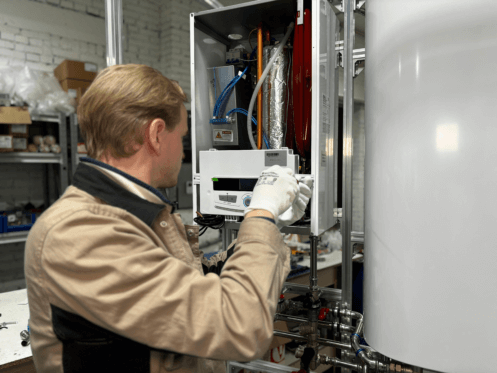
- Locate the thermostat. On electric water heaters, it’s usually behind a panel near the bottom of the tank (there may be two, upper and lower). On gas water heaters, it’s typically a dial near the gas control valve.
- Use a thermometer to test actual output. Run hot water into a cup at the tap furthest from the heater and measure with a food or meat thermometer; the dial setting doesn’t always match actual output.
- Adjust gradually. Turn the dial in small increments and wait 24 hours before retesting, since the whole tank takes time to stabilize.
- For electric heaters with two thermostats, set both the upper and lower elements to the same temperature to avoid uneven heating or element strain.
Safety note: Always turn off power (electric) or set the gas valve to “pilot” before removing any access panel.
Is 120°F too cold for a shower?
No, 120°F is a comfortable temperature for showering and is the standard safety recommendation from the U.S. Department of Energy and the Consumer Product Safety Commission (CPSC).
What temperature kills bacteria in a water heater?
Legionella bacteria are killed at 140°F (60°C) or higher. Many plumbing codes and health agencies recommend storing water at 140°F and using a tempering valve to deliver safer 120°F water at fixtures.
What is the OSHA/CPSC recommended max temperature to prevent scalding?
The CPSC recommends a maximum of 120°F at the tap to reduce scald risk, particularly in homes with young children or elderly residents.
Does a lower water heater temperature save money?
Yes. The Department of Energy estimates 3–5% energy savings for every 10°F reduction in water heater temperature.
What’s the vacation setting on a water heater?
Most modern water heaters have a “vacation” or “pilot” mode that maintains a low temperature (often around 50°F) to prevent freezing or bacterial growth without heating water you’re not using, helpful for trips longer than a few days.
Bottom line
For most homes, 120°F is the recommended water heater temperature. Safe, energy-efficient, and sufficient for daily needs. Households with higher Legionella risk or specific appliance requirements may need 140°F paired with a tempering valve.