
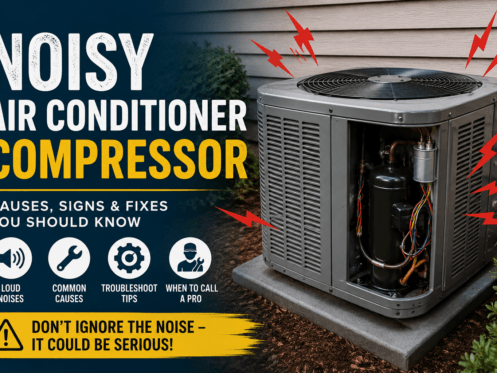
A noisy air conditioner compressor is commonly caused by loose components, electrical problems, refrigerant issues, failing motor parts, or compressor wear. Buzzing, rattling, or loud humming noises from the outdoor AC unit should be inspected, especially if cooling performance has changed or the sound suddenly worsens.
Why Is your AC Compressor Noisy?
Your compressor is the heart of your air conditioning system. Located inside the outdoor condenser unit, it pressurizes refrigerant and keeps cool air flowing through your home.
Over time, normal wear, weather exposure, and lack of maintenance can lead to HVAC compressor problems that create unusual sounds. Some noises are harmless. Others signal serious mechanical or electrical failure.
A loud air conditioner compressor usually indicates one of these common issues:
Loose or Damaged Parts
Vibration can loosen screws, fan blades, mounting hardware, or internal components over time. This often creates a rattling air conditioner unit sound that becomes louder during startup or shutdown.
Loose parts may seem minor, but continued vibration can damage the compressor housing or fan assembly.
Electrical Problems
A buzzing AC compressor may point to electrical trouble such as:
- Failing contactors
- Loose wiring
- Bad capacitor
- Voltage imbalance
Electrical issues should always be handled by a licensed HVAC technician because they can create fire risks or compressor burnout.
Refrigerant Issues
Low refrigerant levels or pressure imbalances can force the compressor to work harder than normal. This may create humming, clicking, or vibrating noises while reducing cooling performance.
If your outdoor AC unit making loud noise is also blowing warm air indoors, refrigerant problems are a strong possibility.
Compressor Wear and Tear
Older compressors naturally become louder over time. Internal bearings, valves, and motor components wear down after years of operation.
A failing compressor often produces grinding, clanking, or hard-start noises that worsen gradually.
Different AC Noises and What They Mean
Not every sound points to the same issue. The type of noise often helps narrow down the problem.
Buzzing Noise
An AC compressor making noise that sounds like buzzing is commonly linked to electrical issues or loose components.
Possible causes include:
- Faulty capacitor
- Loose wiring
- Dirty condenser coils
- Refrigerant leaks
If the buzzing becomes loud or persistent, schedule AC compressor repair soon.
Rattling Noise
A rattling air conditioner unit usually means something has loosened inside the condenser.
Common causes:
- Loose fan blades
- Debris inside the unit
- Worn mounting brackets
- Failing motor components
Ignoring rattling can lead to more serious damage if parts begin striking other components.
Banging or Clanking
Banging noises are more serious and often indicate broken internal compressor parts or motor damage.
This is not a DIY situation. Shut the system off and contact an HVAC professional immediately to prevent catastrophic compressor failure.
Humming or Vibrating
A low humming sound is normal during operation. However, excessive vibration or unusually loud humming may signal:
- Compressor strain
- Hard-start problems
- Loose mounting feet
- Electrical issues
When a Noisy Compressor Becomes Dangerous
Some compressor noises are more than annoying — they can become safety hazards.
Call for immediate service if you notice:
- Burning smells
- Tripped breakers
- Smoke near the outdoor unit
- Loud banging or screeching
- Sudden loss of cooling
- Ice buildup on refrigerant lines
Running a damaged compressor too long can destroy the entire air conditioning system.
Troubleshooting Tips Homeowners Can Try
Before calling for service, there are a few safe checks homeowners can perform.
Inspect for Debris
Leaves, sticks, or rocks inside the outdoor unit can create rattling or vibration noises. Turn power off before inspecting the condenser.
Tighten Visible Panels
Loose access panels sometimes create unnecessary vibration. If screws appear loose, tightening them may reduce noise.
Replace the Air Filter
Restricted airflow forces the system to work harder and may increase compressor strain. A clogged filter can indirectly contribute to HVAC compressor problems.
Listen Carefully
Try to identify:
- When the noise happens
- Whether it changes during startup
- If cooling performance has dropped
This information helps technicians diagnose problems faster.
Avoid opening sealed compressor components or handling electrical parts yourself.
When to Call an HVAC Professional
If the noise persists for more than a day or suddenly becomes louder, it’s time for professional diagnosis.
An experienced HVAC technician can:
- Test compressor pressure
- Inspect electrical components
- Measure refrigerant levels
- Check motor amperage
- Determine if AC compressor repair is possible
Many homeowners wait too long because the system still cools initially. Unfortunately, compressors often fail gradually before completely shutting down.
Early repairs are usually far less expensive than full system replacement.
Repair vs. Replacement: What Makes Sense?
Not every noisy compressor requires replacement. The right solution depends on system age, repair cost, and overall condition.
Repair Often Makes Sense If:
- The unit is under 10 years old
- The issue is electrical or minor
- Cooling performance remains strong
- Repairs are relatively inexpensive
Replacement May Be Better If:
- The compressor has internal mechanical failure
- Repair costs exceed half the value of the system
- The AC unit is over 12–15 years old
- Refrigerant type is outdated
A trustworthy HVAC company should explain both options clearly rather than automatically pushing replacement.
Conclusion
A noisy air conditioner compressor is your system’s way of signaling that something needs attention. Whether it’s a buzzing AC compressor, rattling air conditioner unit, or loud humming sound, addressing the issue early can prevent major damage and expensive breakdowns.
If your outdoor AC unit making loud noise has changed noticeably or your cooling performance is slipping, scheduling a professional inspection is the smartest next step. Small problems are almost always easier — and cheaper — to fix before they turn into full compressor failure.
Why is my AC compressor making a loud buzzing noise?
A buzzing AC compressor is often caused by electrical issues, loose wiring, failing capacitors, or refrigerant problems. It should be inspected if the noise continues.
Is a noisy air conditioner compressor dangerous?
It can be. Loud banging, screeching, burning smells, or tripped breakers may indicate serious compressor or electrical failure that requires immediate attention.
Can I run my AC if the compressor is noisy?
You can temporarily run it for minor noises, but continuing operation during serious compressor problems may worsen damage and increase repair costs.
How much does AC compressor repair cost?
Costs vary depending on the issue, but common AC compressor repair services range from a few hundred dollars to several thousand for full compressor replacement.
What does a rattling outdoor AC unit mean?
A rattling air conditioner unit usually means loose hardware, debris, fan blade problems, or worn components inside the condenser.
Should I repair or replace a loud AC compressor?
If the unit is older or the compressor has major internal damage, replacement may be more cost-effective than repair. A professional inspection can help determine the best option.