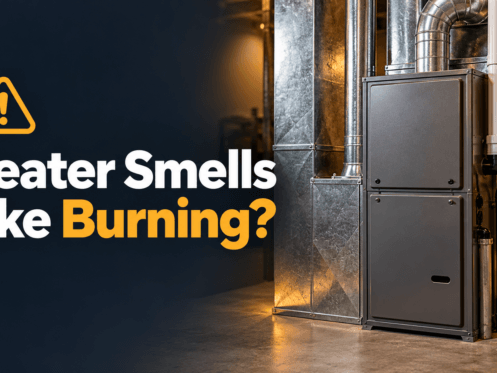
A heater that smells like burning may be warming up accumulated dust, especially during its first use of the season. However, a strong, persistent electrical or melting-plastic smell needs immediate attention. The type of odor, when it starts, and whether it fades help determine your next step.
For homeowners in Nixa and Springfield, the first cold evening often means turning on heating equipment that has been idle for months. A faint dusty odor can happen during that first startup. A smell that grows stronger or returns every heating cycle deserves a closer look.
Here is how to recognize common causes, respond safely, and know when to call an HVAC professional.
What to Do First When Your Heater Smells Like Burning
Before checking a filter or adjusting the thermostat, look for signs that require you to leave the home.
If you see flames, sparks, or significant smoke: Get everyone outside and call 911. Do not delay your exit to investigate the furnace or shut off equipment.
If you smell rotten eggs or natural gas: Leave immediately. Do not operate the thermostat, electrical switches, appliances, or phones inside the building. From a safe location outside, contact your gas utility’s emergency line or 911. Do not return until responders say it is safe.
If a carbon monoxide alarm sounds, or you suspect carbon monoxide exposure: Move everyone outside into fresh air and call 911. Headache, dizziness, nausea, and confusion can be warning signs. Carbon monoxide has no smell, so a burning odor cannot tell you whether it is present.
If the odor smells electrical or like melting plastic, without an active emergency: Turn the heating system off at the thermostat if you can safely reach it, and arrange professional service. Do not keep running it to see whether the smell disappears.
6 Common Reasons Your Heater Smells Like Burning
1. Dust Burning Off During the First Heating Cycle
Dust can settle on heating components while the system is unused. When those surfaces become hot again, the dust may produce a dry, burnt smell.
This explanation is more likely when the odor begins during the first heating cycle after a long break, stays mild, and quickly fades. It should not come with smoke, unusual noises, or poor airflow.
What to do: If the odor is clearly mild and dusty, with no warning signs, monitor the initial startup while you remain home. If it persists, becomes stronger, or returns repeatedly, shut the system off and schedule an inspection. Do not assume every startup odor is harmless dust.
2. A Dirty Filter or Restricted Airflow
A clogged filter reduces the air moving through your heating system. In a furnace, restricted airflow can cause excessive temperatures and trigger a safety shutdown. Blocked returns, closed supply vents, or a dirty indoor coil can also contribute to airflow problems.
You may notice weak airflow, uneven heating, or a furnace that repeatedly starts and stops.
What to do: With the equipment off and cool, check the homeowner-accessible filter. Replace it if needed using the correct size and manufacturer-approved specifications. Keep supply and return grilles clear.
A new filter does not establish that an overheating problem is resolved. If the smell persists or the furnace keeps shutting down, leave it off and call for service. Never operate the system without its filter.
3. An Overheating Blower Motor
The blower moves heated air through your ductwork. Motor wear, electrical faults, or mechanical resistance can cause overheating and a burning odor.
Possible accompanying symptoms include humming, grinding, reduced airflow, or a fan that struggles to start. An odor alone cannot confirm which component has failed.
What to do: Stop using the heater and request professional diagnosis. Do not reach into the blower compartment, attempt to lubricate the motor, or repeatedly restart the equipment. Blower repairs involve moving parts and electrical components that require proper isolation and testing.
4. Overheated Wiring or a Failing Control Board
A sharp, acrid smell can come from overheated electrical insulation, connections, or controls. A failing furnace control board may also produce a burning smell.
Buzzing, repeated breaker trips, or erratic operation make professional inspection especially important.
What to do: Turn the system off if it is safe to do so and leave it off until inspected. Do not remove electrical covers, reset a tripped breaker repeatedly, or replace controls based on the odor alone.
5. Debris or Foreign Material Near Heating Components
Pet hair, lint, renovation debris, or an object inside the heating system can create an odor when exposed to heat. Items placed against heating equipment or over registers can also create problems.
An odor concentrated near one vent is useful information for the technician, but it does not prove the source is inside that duct. Air can carry smells from elsewhere.
What to do: Once the equipment is off and cool, check accessible areas around registers and the outside of the unit. Remove nearby clutter without opening equipment cabinets. Leave objects inside ducts or heating compartments to a professional.
6. Fuel, Combustion, or Venting Problems
A smoky, oily, or exhaust-like odor from fuel-burning heating equipment needs professional attention. Possible concerns include improper combustion, fuel leakage, or a venting problem. These require inspection rather than a homeowner adjustment.
What to do: Stop using the equipment and arrange service. If you smell gas, notice significant smoke, hear a CO alarm, or feel symptoms of possible exposure, follow the evacuation instructions above.
A technician must assess combustion and venting with appropriate instruments. Smell alone cannot diagnose a cracked heat exchanger or confirm safe operation.
Safe Homeowner Troubleshooting Checklist
Only perform these checks after ruling out emergency conditions:
- Note when the odor occurs. Is this the first seasonal startup, every heating cycle, or a problem that began suddenly?
- Turn off the equipment before checking accessible areas. Follow the owner’s manual and allow hot surfaces to cool.
- Inspect the filter. Confirm its size, condition, and installation direction.
- Clear supply and return grilles. Move furniture, rugs, and curtains that obstruct airflow.
- Record other symptoms. Weak airflow, unusual sounds, error messages, and repeated shutdowns can help the technician.
Keep furnace panels in place. Do not clean burners, inspect live wiring, bypass safety switches, or repeatedly reset equipment. If you cannot confidently identify the odor as brief seasonal dust, arrange an inspection before further use.
What an HVAC Technician Will Check
A useful inspection looks for the cause of the odor and any operating condition contributing to it.
Depending on your equipment and symptoms, the technician may examine the filter and airflow, blower assembly, motor, electrical connections, controls, and evidence of overheating. On fuel-burning equipment, the inspection may also include burners, the heat exchanger, combustion performance, and the venting system.
Describe when the smell starts, where you notice it, and whether heating performance changes. Avoid restarting a system with a suspected electrical or combustion problem just to demonstrate the odor.
How to Help Prevent Burning Smells
Check your filter regularly and replace it according to its instructions and your household conditions. Homes with pets or ongoing renovation work may need more frequent checks. Avoid choosing a more restrictive filter without confirming that your system can accommodate it.
Keep combustible materials away from heating equipment and maintain the clearances required by its manufacturer. Schedule professional heating maintenance before heavy winter use, and keep smoke and carbon monoxide alarms working according to their instructions. Maintenance helps identify developing problems, but a new burning smell still deserves attention.
Frequently Asked Questions
How long should a burning smell last when I first turn on the heater?
A mild dusty smell should fade promptly during initial startup. There is no waiting period that makes an electrical, plastic, smoky, or worsening odor safe. If you are unsure about the smell, stop the system and seek professional advice.
Why does my heater smell like burning every time it runs?
A recurring odor needs inspection. Restricted airflow, accumulated debris, or a developing motor or electrical problem may be involved. Repeated odors should not be dismissed as normal seasonal dust.
Can I sleep with the heater running if it smells like burning?
Do not leave a heater with an unexplained burning odor running overnight. Have persistent or suspicious odors evaluated before returning to normal use.
Heating Help in Nixa and Springfield, MO
If your heater smells like burning and the odor persists or returns, contact Queen City Heating & Cooling for an inspection. Our team can evaluate the source and explain the appropriate repair.
Schedule furnace repair in Nixa, MO, or contact Queen City Heating & Cooling to ask about heating service in Springfield, Ozark, Republic, and nearby communities.
For smoke, fire, suspected gas leaks, or a carbon monoxide alarm, leave the home and contact emergency responders first.