The most common HVAC problems include dirty air filters, refrigerant leaks, frozen evaporator coils, thermostat failures, clogged condensate drains, dirty condenser coils, blower motor problems, capacitor failures, electrical issues, and poor airflow. Most HVAC problems start small and become expensive when ignored. Routine maintenance is the best way to prevent unexpected breakdowns and extend the life of your heating and cooling system.
The 12 Most Common HVAC Problems
Dirty Air Filters
Dirty air filters remain the number one cause of HVAC problems. I’ve visited homes where replacing a $20 filter restored proper airflow and prevented a compressor failure that would have cost thousands of dollars.
When airflow becomes restricted, your HVAC system struggles to circulate conditioned air throughout the house. The blower motor works harder, the evaporator coil becomes colder than intended, and eventually the coil may freeze completely.
Symptoms
- Weak airflow
- High utility bills
- Uneven temperatures
- Frozen indoor coil
- Furnace overheating
Solution
Replace disposable filters every one to three months, depending on pets, allergies, and household dust.
Refrigerant Leaks
Contrary to popular belief, air conditioners don’t use up refrigerant over time. If refrigerant levels are low, there’s almost always a leak somewhere in the sealed system. A refrigerant leak reduces cooling capacity, forces the compressor to work harder, and can eventually damage one of the most expensive components in the system.
Symptoms
- Warm air from vents
- Longer cooling cycles
- Ice forming on refrigerant lines
- Hissing sounds
- Rising electric bills
Solution
Simply adding refrigerant isn’t the answer. A certified HVAC technician should locate the leak, repair it, and recharge the system to the manufacturer’s specifications.
Frozen Evaporator Coil
One of the most common summer service calls involves a frozen evaporator coil. Even when outdoor temperatures exceed 95°F, your indoor coil can become completely covered with ice if airflow is restricted or refrigerant levels are low. I’ve seen homeowners assume the system is “working extra hard” because it’s covered in ice. In reality, ice impedes proper heat transfer, so your air conditioner cools less effectively.
Common Causes
- Dirty air filter
- Low refrigerant
- Dirty evaporator coil
- Blower motor failure
- Blocked return vents
Solution
Turn off the system to let the ice melt, replace the filter if needed, and schedule professional service if the problem returns.
Dirty Condenser Coils
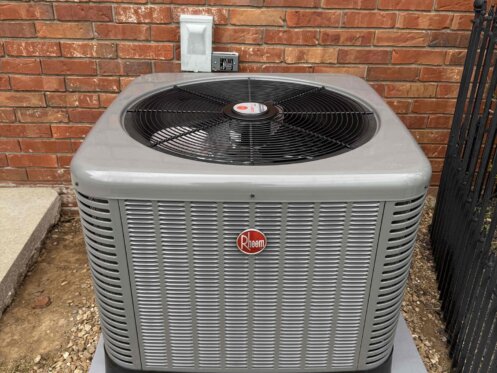
Your outdoor condenser unit releases heat collected from inside your home. When the coil becomes coated with dirt, grass clippings, cottonwood, leaves, or debris, heat cannot escape efficiently. As a result, the compressor must run longer and consume more electricity.
Symptoms
- AC runs continuously
- Higher energy bills
- Poor cooling
- Outdoor unit feels extremely hot
- Reduced efficiency
Solution
Keep at least two feet of clearance around the outdoor unit and have condenser coils professionally cleaned during annual maintenance.
Thermostat Problems
Sometimes the HVAC equipment isn’t the problem at all. Incorrect thermostat settings, weak batteries, faulty sensors, or software issues with smart thermostats can all prevent the system from operating properly. I’ve completed many service calls where changing thermostat batteries solved the problem within minutes.
Symptoms
- Blank thermostat screen
- HVAC won’t start
- Incorrect room temperature
- Frequent cycling
- Constant running
Solution
Check batteries, verify settings, and ensure the thermostat is level and properly calibrated before assuming there’s a larger HVAC problem.
Capacitor Failure
Capacitors help start and run the motors inside your HVAC system. Summer heat places tremendous stress on these components, making them one of the most commonly replaced HVAC parts. A failing capacitor may prevent the outdoor fan or compressor from starting even though the thermostat is calling for cooling.
Symptoms
- Humming outdoor unit
- AC won’t start
- Fan won’t spin
- System repeatedly shuts off
- Delayed startup
Solution
Capacitors store electricity and should only be replaced by trained HVAC professionals.
Blower Motor Problems
The blower motor distributes conditioned air throughout your home. When it begins failing, your furnace or air conditioner may still produce heating or cooling, but very little air reaches your living spaces.
Symptoms
- Weak airflow
- Squealing noises
- Burning smell
- Constant blower operation
- Uneven temperatures
Solution
Blower motors can sometimes be repaired, but older motors may require replacement depending on the extent of wear.
Clogged Condensate Drain Line
Air conditioners remove moisture from indoor air. That water drains through a small condensate line, which can eventually become clogged with algae, mold, or debris. Many homeowners mistake this water leak for a plumbing problem.
Symptoms
- Water around indoor unit
- AC shuts off unexpectedly
- Musty odors
- Water damage near furnace
- Overflow safety switch activation
Solution
Annual HVAC maintenance typically includes cleaning the condensate drain before blockages develop.
Electrical Problems
Every HVAC system depends on dozens of electrical connections. Over time, vibration, heat, moisture, and age can loosen wiring or damage electrical components. Electrical problems often cause intermittent failures that become increasingly difficult to diagnose.
Common Issues
- Burned contactors
- Loose wiring
- Failed relays
- Blown fuses
- Damaged circuit boards
Symptoms
- Breaker trips
- System randomly shuts off
- Burning smell
- Outdoor unit won’t start
Solution
Electrical repairs should always be performed by qualified HVAC professionals.
Dirty Flame Sensor
For gas furnaces, a dirty flame sensor is among the most common winter repairs. The flame sensor confirms that the burners have ignited safely. If it becomes coated with carbon buildup, the furnace shuts itself off as a safety precaution.
Symptoms
- Furnace starts then immediately stops
- No heat
- Repeated ignition attempts
- Flashing error codes
Fortunately, cleaning the flame sensor is often a quick and inexpensive repair.
Poor Airflow Throughout the Home
Poor airflow isn’t always caused by the HVAC equipment itself. I’ve inspected homes where perfectly functioning HVAC systems couldn’t keep rooms comfortable simply because furniture blocked supply vents or ductwork had significant leaks.
Causes
- Closed vents
- Dirty filters
- Leaking ducts
- Blocked returns
- Poor duct design
Symptoms
- Hot and cold rooms
- Weak airflow
- Long run times
- High energy bills
Improving airflow often increases comfort without replacing the HVAC system.
Lack of Preventive Maintenance
The biggest HVAC problem isn’t actually a mechanical failure. It’s skipping maintenance. During a professional tune-up, technicians inspect refrigerant levels, electrical connections, airflow, motors, capacitors, drain lines, thermostat operation, burners, heat exchangers, safety controls, and overall system performance. Routine maintenance catches worn parts before they fail during the hottest or coldest days of the year.
Warning Signs Your HVAC System Needs Immediate Attention
Many homeowners ignore subtle changes in performance until the system completely fails.
Contact an HVAC professional if you notice:
- Warm air instead of cool air
- Weak airflow
- Strange odors
- Grinding, squealing, or banging noises
- Water leaking around the unit
- Ice forming on refrigerant lines
- Higher-than-normal utility bills
- Frequent cycling
- Uneven temperatures
- Thermostat not responding
Early diagnosis almost always reduces repair costs.
How to Prevent Most HVAC Problems
Preventive maintenance is the best investment you can make in your HVAC system.
To reduce breakdowns:
- Replace air filters every one to three months.
- Schedule professional maintenance in the spring and fall.
- Keep the outdoor condenser clean and free of debris.
- Leave all supply and return vents open.
- Listen for unusual sounds.
- Address small problems before they become major repairs.
- Keep shrubs and plants at least two feet away from the outdoor unit.
- Install a programmable or smart thermostat to improve efficiency.
These simple steps can improve energy efficiency, reduce utility bills, and extend the life of your HVAC equipment.
Final Thoughts
Most HVAC failures don’t happen overnight. They usually begin with subtle warning signs like reduced airflow, longer run times, unusual noises, or rising energy bills. Paying attention to these early indicators can help you avoid expensive emergency repairs and keep your home comfortable throughout the year.
In my experience, the healthiest HVAC systems aren’t necessarily the newest—they’re the ones that receive consistent maintenance. Something as simple as replacing an air filter on time or scheduling a seasonal tune-up can prevent many of the problems homeowners face. By understanding the most common HVAC issues and addressing them early, you can improve energy efficiency, extend the lifespan of your equipment, and reduce the likelihood of unexpected breakdowns when you need your heating or cooling system the most.