
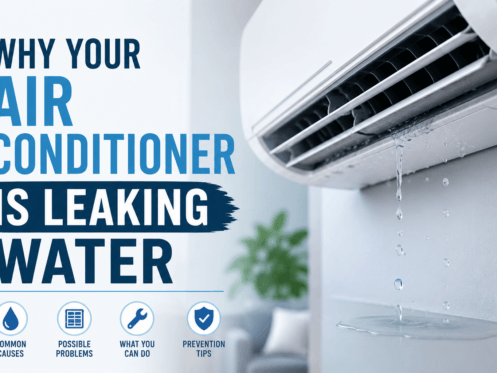
If your air conditioner is leaking water, the most likely causes are a clogged condensate drain line, a frozen evaporator coil, a dirty air filter, or a damaged drain pan. While some issues are relatively minor, water leaking from your AC should never be ignored because it can quickly lead to water damage, mold growth, and costly repairs.
Every summer, people across Nixa, Springfield, Ozark, and the surrounding communities call us after discovering water around their indoor AC unit. Often, the first reaction is panic. Fortunately, in most cases, the problem can be traced back to a handful of common issues that HVAC technicians encounter every day.
The key is understanding why the water isn’t draining where it’s supposed to go. If your air conditioner is also leaking water in Nixa, MO. We can repair your air conditioner in no time.
For information or to schedule a service call, contact us today!
Where Does the Water Come From?
Many homeowners are surprised to learn that their air conditioner is supposed to produce water.
As your AC cools your home, it also removes humidity from the air. Warm, humid air passes across the cold evaporator coil inside your indoor unit. When that happens, moisture naturally condenses on the coil, much like water droplets forming on a cold glass on a hot day.
Under normal conditions, that moisture drips into a drain pan and flows through a condensate drain line before safely exiting your home.
When you see water around the indoor unit, it means something is interrupting that drainage process.
A Clogged Condensate Drain Line Is the Most Common Cause
If there’s one issue we see more than any other, it’s a condensate drain line clogged with dirt, algae, or debris.
Over time, moisture inside the drain line creates an environment where slime, mold, and buildup can develop. Eventually, the blockage becomes severe enough to prevent water from draining properly.
Once that happens, the water begins backing up into the drain pan. If the blockage isn’t cleared, the pan eventually overflows, sending water onto the floor, into the attic, or even through the ceiling below.
In many homes, the first sign is a water stain appearing on the ceiling near the indoor air handler.
Fortunately, this is often one of the simpler repairs. Professional drain line cleaning can usually restore normal drainage before major damage occurs.
Your Air Filter Could Be Causing the Leak
One of the most overlooked causes of an AC leaking water is a dirty air filter.
At first glance, the connection doesn’t seem obvious. After all, what does an air filter have to do with water?
Quite a bit, actually.
Your air conditioner depends on proper airflow moving across the evaporator coil. When the filter becomes clogged with dust and debris, airflow decreases significantly. Without enough warm air passing over the coil, the coil temperature can drop below freezing.
That’s when ice begins to form.
Many homeowners never notice the ice. Instead, they discover the problem later when the system shuts off, and the frozen coil starts melting. The amount of water released can overwhelm the drain system, creating puddles around the unit.
This is one reason we always check the air filter first during an AC water leak service call.
A Frozen Evaporator Coil Can Create a Major Leak
A frozen evaporator coil is another common reason an air conditioner leaks water inside the house.
When homeowners hear the term “frozen coil,” they often picture a small amount of frost. In reality, we’ve seen evaporator coils completely encased in ice.
Once that ice melts, it can release a surprising amount of water.
Dirty air filters are a leading cause of frozen coils, but they’re not the only possibility. Restricted airflow, blower motor problems, blocked vents, and refrigerant issues can all contribute to freezing.
If you notice ice on refrigerant lines, reduced cooling performance, or unusually weak airflow from your vents, there’s a good chance the evaporator coil is freezing.
The safest first step is to turn off the cooling mode and allow the system to thaw completely. If the problem returns, a professional diagnosis is usually necessary because an underlying issue is often causing the coil to freeze repeatedly.
Low Refrigerant Can Lead to Water Leaks
Many people assume refrigerant and water leaks are unrelated, but low refrigerant levels frequently contribute to AC water leakage.
When refrigerant levels drop, pressure inside the evaporator coil decreases. This causes the coil to become excessively cold, which can trigger ice formation.
The process usually follows a predictable pattern. A refrigerant leak develops, the evaporator coil freezes, ice accumulates, and eventually everything melts. The resulting water often exceeds what the drain system can handle.
In addition to water around the unit, homeowners may notice that their house isn’t cooling properly. Some systems may run continuously without reaching the thermostat setting.
Because refrigerant systems require specialized tools and EPA-certified handling procedures, this is always a repair that should be left to a licensed HVAC technician.
A Damaged Drain Pan May Be the Problem
The drain pan sits beneath the evaporator coil and serves one simple purpose: collecting condensation before it enters the drain line.
Unfortunately, drain pans don’t last forever.
Older systems often develop rust, corrosion, or small cracks that allow water to escape before it reaches the drain line. We’ve seen this issue most commonly in systems that have been operating for ten years or longer.
When a drain pan begins failing, the leak may appear even though the drain line itself is completely clear.
Because the damage is often hidden inside the equipment, many homeowners don’t discover the problem until water appears around the air handler or on the ceiling below an attic installation.
Improper Installation Can Cause Drainage Problems
Not every AC leak is caused by a failing component.
Sometimes the issue traces back to the original installation.
Your indoor unit must be properly positioned so condensation naturally flows toward the drain outlet. If the system is not level or the drain line was installed with an improper slope, water may collect in areas where it shouldn’t.
While installation-related issues are less common than clogged drain lines, they do occur. We’ve occasionally inspected systems that leaked almost from day one because the drainage system was never set up correctly.
If your air conditioner has experienced recurring water issues since it was installed, improper installation could be contributing to the problem.
Condensate Pump Failures
Some homes rely on a condensate pump to move water from the indoor unit to a drain location.
When that pump stops working, the water has nowhere to go.
The collection reservoir fills, overflows, and eventually creates a leak around the system.
Condensate pumps typically fail because of age, mechanical wear, or electrical issues. While the repair is usually straightforward for a professional technician, homeowners often mistake the symptoms for a clogged drain line because both problems create similar water leakage.
Is AC Water Leakage Dangerous?
The water itself isn’t usually dangerous, but the consequences can be.
Even a relatively small leak can damage drywall, flooring, insulation, wood framing, and ceilings if left unaddressed. Moisture also creates conditions that encourage mold growth, particularly in attics and utility closets where leaks may go unnoticed for days.
We’ve seen situations where a simple drain line blockage turned into thousands of dollars in ceiling repairs because the leak wasn’t discovered early.
That’s why any unexplained water around an air conditioner deserves attention.
Should I Turn Off My AC If It’s Leaking?
In most cases, yes.
If you notice significant water leaking from your air conditioner, turning the system off is the safest course of action until the source of the problem can be identified.
Continuing to run the system may increase water damage and could worsen underlying issues such as frozen coils or drainage blockages.
If the leak is minor and you can safely determine that it is coming from a clogged drain line, you may be able to address the problem yourself. However, when the cause is unclear, shutting the system down and scheduling professional service is usually the smartest option.
How Much Does It Cost to Fix an AC Water Leak?
The cost depends entirely on what’s causing the leak.
A simple drain line cleaning may be relatively inexpensive, while repairs involving refrigerant leaks, evaporator coils, or major component replacements can be more significant investments.
The good news is that many water leaks are caught early and repaired before major damage occurs.
Regular maintenance is one of the best ways to avoid larger repair bills because technicians can identify developing drainage issues before they become emergencies.
How to Prevent Future Air Conditioner Leaks
The best way to prevent an air conditioner from leaking water is through routine maintenance.
Homeowners should replace air filters regularly, keep vents open and unobstructed, and pay attention to any signs of reduced airflow or unusual moisture around the system.
Professional maintenance is equally important. During annual tune-ups, HVAC technicians inspect drain lines, clean condensate systems, verify refrigerant levels, check evaporator coil performance, and look for early signs of wear that could eventually lead to leaks.
Many of the water leak calls we receive each summer could have been prevented through simple maintenance performed before the cooling season began.
Final Thoughts
If you’re asking yourself, “Why is my AC leaking water?” the answer usually comes down to a drainage problem, airflow issue, frozen evaporator coil, refrigerant concern, or aging component inside the system.
The most common culprit is a clogged condensate drain line, but every leak should be investigated before it causes damage to your home.