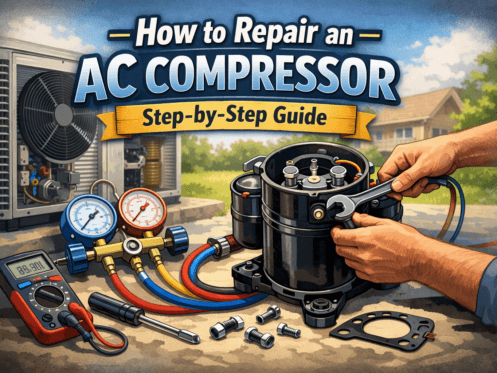
Repairing an AC compressor usually involves diagnosing electrical issues, replacing faulty components such as capacitors or contactors, fixing refrigerant leaks, or addressing overheating. While minor issues can sometimes be repaired, a severely damaged compressor often requires replacement by a licensed HVAC technician.
What Does an AC Compressor Do?
An AC compressor is the main component of an air conditioning system, circulating refrigerant between the indoor and outdoor units. It compresses the refrigerant and sends it through the condenser, allowing the system to remove heat from your home.
If the compressor fails, the air conditioner cannot cool the home properly.
Signs Your AC Compressor Needs Repair
Before attempting a repair, you should identify whether the compressor is actually the problem.
Common signs include:
- The AC is blowing warm air
- Loud noises from the outdoor unit
- Frequent circuit breaker trips
- Hard starting or delayed startup
- Outdoor unit vibrating excessively
- Reduced cooling performance
These symptoms often indicate electrical problems, refrigerant issues, or compressor wear.
Call For More Information
How to Repair an AC Compressor: Step-by-Step
1. Turn Off Power to the System
Always turn off the power at the breaker panel and disconnect switch before inspecting the compressor.
Working on an energized AC unit can cause electrical shock or damage.
2. Inspect the Capacitor
A faulty capacitor is one of the most common causes of a compressor’s failure to start.
Steps:
- Remove the access panel on the outdoor unit.
- Locate the start/run capacitor.
- Check for signs of failure such as:
- Bulging top
- Leaking oil
- Burn marks
If the capacitor is defective, replace it with the same voltage and microfarad rating.
3. Check the Contactor
The AC contactor controls power flow to the compressor.
Signs of a faulty contactor:
- Burnt or pitted contacts
- The AC unit is clicking but not starting
- Compressor not receiving power
Replacing a contactor is relatively inexpensive and often restores operation.
4. Test the Compressor Motor
Use a multimeter to check electrical continuity.
Test for:
- Open windings
- Short circuits
- Ground faults
If the compressor motor windings are damaged, the compressor typically must be replaced.
5. Check Refrigerant Levels
Low refrigerant can cause the compressor to overheat and stop working.
Common causes:
- Refrigerant leaks
- Improper charging
- Damaged coils
A certified HVAC technician should handle refrigerant repairs because they require specialized equipment.
6. Clean the Condenser Coils
Dirty condenser coils can overwork the compressor, leading to overheating.
To clean coils:
- Turn off the power.
- Remove debris from the unit.
- Spray coils with a coil cleaner or water hose.
- Allow them to dry before restarting.
Regular cleaning improves efficiency and protects the compressor.
7. Reset the Compressor (If Overheated)
Some compressors shut down due to overheating.
You can try:
- Turning off the system for 30–60 minutes
- Allowing the compressor to cool
- Restarting the unit
If overheating continues, there may be airflow or refrigerant problems.
AC Compressor Repair Cost
The cost to repair an AC compressor varies depending on the issue.
Typical repair costs:
| Repair Type | Average Cost |
| Capacitor replacement | $100 – $300 |
| Contactor replacement | $150 – $350 |
| Refrigerant recharge | $200 – $600 |
| Compressor replacement | $1,200 – $2,800 |
In many cases, replacing the compressor may be more cost-effective than repairing it.
When Should You Replace an AC Compressor?
Replacing the compressor may be the better option if:
- The compressor motor is burned out
- The system is over 10–12 years old
- Repair costs exceed 50% of a new AC system
- The compressor repeatedly overheats
A technician can evaluate whether repair or replacement makes more sense.
Frequently Asked Questions
Can you repair an AC compressor yourself?
Homeowners can perform simple tasks like cleaning coils or replacing capacitors. However, most compressor repairs require professional HVAC tools and certification.
How long do AC compressors last?
Most AC compressors last 10 to 15 years with proper maintenance.
Why does an AC compressor stop working?
Common causes include electrical failure, refrigerant leaks, overheating, dirty coils, or worn internal components.
Is it worth repairing an AC compressor?
If the system is relatively new and the issue is minor, repair is often worthwhile. However, major compressor failures often require replacement.
Key Takeaway
An AC compressor is the heart of an air conditioning system, and when it fails, cooling performance drops significantly. Many compressor issues stem from electrical components, refrigerant problems, or overheating. While minor issues may be repairable, severe compressor damage typically requires replacement by an HVAC professional.
Call For More Information